Farms & Orchards
Electric Utility Carts for Farms & Orchards
Explore electric utility carts for farms and orchards. Configuration advice, vehicle options and factory support for your project.
Discuss Your Application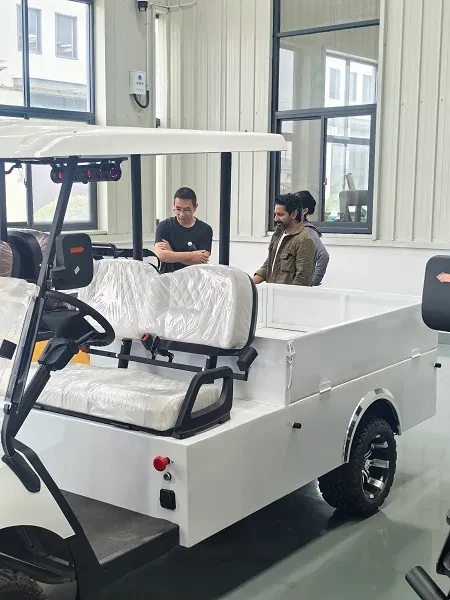

 EN
Explore electric utility carts for farms and orchards. Configuration advice, vehicle options and factory support for your project.
Discuss Your ApplicationFarms & Orchards
Discuss a D-Series rear cargo-body layout for tools, supplies and harvest crates, with a separate passenger arrangement for estate visitors. Match the body to repeated journeys between storage, orchard rows, loading areas and service buildings. The heaviest recurring load, row access and seasonal track conditions determine which build is worth reviewing.
List tools, containers and consumables. Check row access, headland turns, loading height and how each item will be secured within the approved cargo arrangement.
Measure crates and the complete planned load, including the operator. Check loaded handling and access at each stop on the repeated transfer route.
Keep maintenance and produce work separate from guest transport. Specify an approved passenger arrangement for visitor journeys; the cargo body is not a passenger area.
Body & Track Selection
Review cargo layout, tires and the complete vehicle rating as one build. Use the actual load and a representative working route to assess the proposed farm configuration.
The D-Series rear cargo body pictured above is a layout reference for crates, bags and tools. An open bed gives direct loading access; its useful shape depends on crate dimensions and securing needs. Review bed dimensions, body weight, occupants and load placement together before agreeing the complete vehicle’s approved payload.
If bulk unloading is needed, submit the task for separate compatibility review. Confirm the exact mechanism, load distribution, operating instructions and suitable unloading location before including tipping in the specification.
Provide row widths, clearance, slopes, surfaces and wet-weather changes. Match the working day to charging access and seasonal storage. Tire choice alone does not establish suitability for mud or soft ground.
Prepare the Project
Describe the most demanding normal task, including any seasonal restrictions and tracks the vehicle must avoid, when discussing a proposed farm configuration.
Record dimensions, total mass, tools and containers for the heaviest recurring trip. Show the loading height, securing method and how produce is handled at both ends.
Document row spacing, headland turns, gradients, clearance and surface changes. Identify wet-weather restrictions, alternative tracks and any road crossings requiring separate review.
State daily distance, transfers, working hours and idle periods. Include charger location, available power and how harvest schedules or seasonal downtime change the operating pattern.
Request a representative loaded demonstration and the exact body drawing and rating. Agree inspection criteria, spare parts, local repair responsibility and charging or storage instructions.
Useful Answers
Provide crate dimensions and the heaviest complete load. Suitability depends on the exact vehicle rating, usable bed space, load distribution, securing and loaded route review.
Treat tipping as a separate requirement. Confirm whether a compatible body is available, along with its mechanism, operating instructions and load limits.
Tires alone do not establish traction or route suitability. Review the actual surface, load, clearance and slopes, including seasonal changes and routes that must remain outside the operating plan.
Submit trailer weight, hitch loads, gradients and route details for review. Towing requires explicit approval for the complete configuration; neither the cargo body nor a tow hook establishes a towing rating.

Connect with Weiside
A Clear Conversation About Your Next Vehicle.
Let's Talk
Tell us what you're interested in and how we can help.
Selected References