

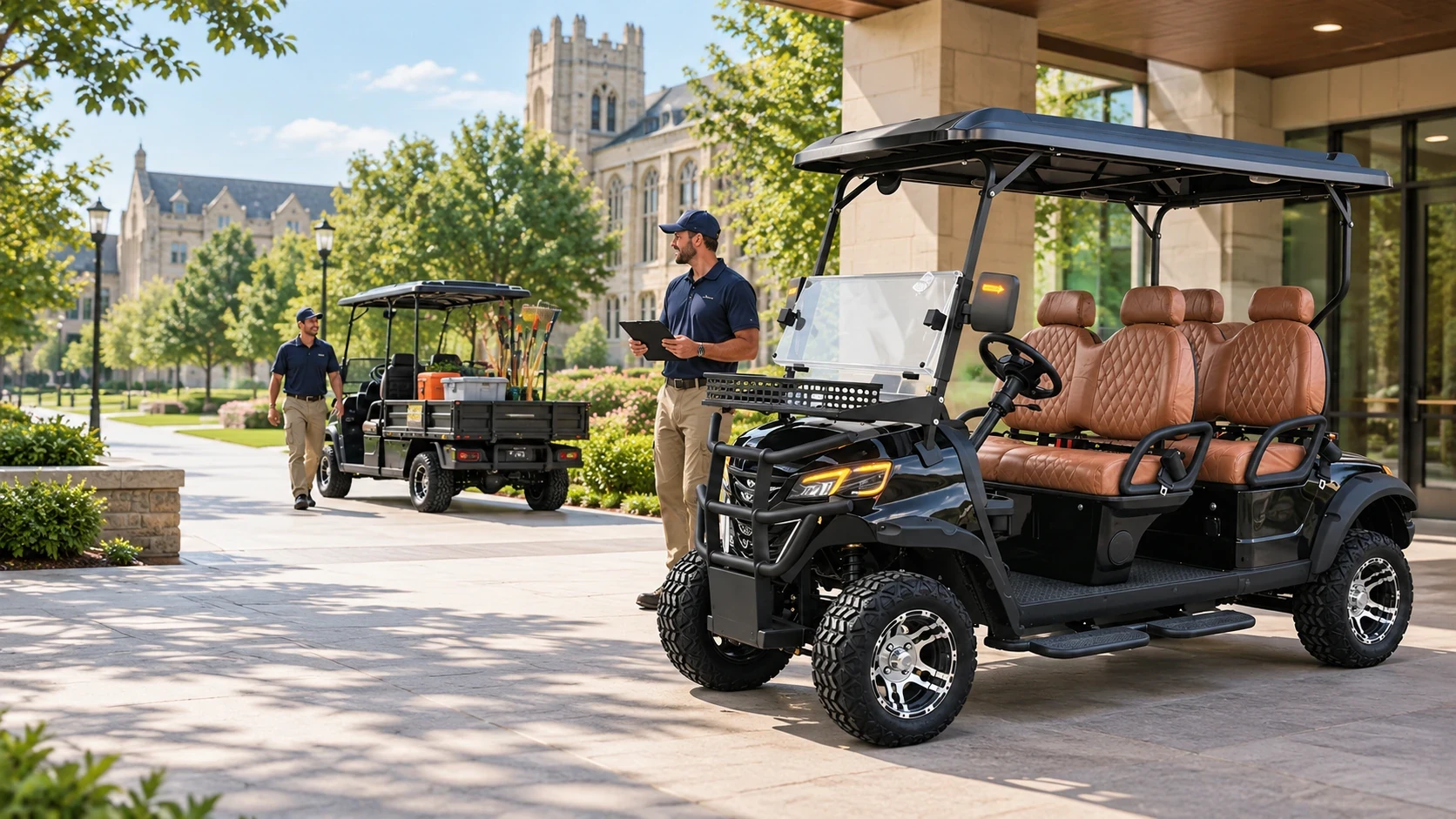
Government & Institutions / Electric Mobility
Clear Requirements.Accountable Delivery.
Passenger transport and working vehicles, specified around the duty and delivered against clear acceptance criteria.
Built around you.Scroll to Explore

Government & Institutions / Electric Mobility
Passenger transport and working vehicles, specified around the duty and delivered against clear acceptance criteria.
Duty-Based Procurement
Weiside can review your requirement schedule against a proposed vehicle configuration, including equipment and supporting documents. Keep campus passenger transport, facilities work and multi-site variations separate so each proposed build has its own route, load, charging and acceptance criteria.
Define passenger places, boarding needs, supervision and stops. Record route width, turns, slopes and charging, then review the proposed layout on a route with a representative load.
List cargo dimensions, work frequency, surfaces and weather exposure. Request rated-load information for the complete proposed build and review the effect of any custom attachment.
Record the common specification and any site-specific changes. Keep the configuration, delivery location and local maintenance responsibilities clear for each vehicle or group.
Documents & Comparison
Keep the quotation, configuration sheet, supplier details, inspection scope, delivery responsibilities and service terms together. Check that each requested document matches the offered vehicle and the tender requirement.
Compare each mandatory item using three entries: the requirement, the offered configuration and the supporting evidence. Keep missing documents and unresolved options beside the relevant item so the purchasing team can review the same scope across proposals.
Record seating or cargo arrangements, the battery package, equipment and configuration revision. Request the specific documents called for by the procurement rather than treating a general catalogue as approval evidence.
List the checks and records expected at delivery, together with service responsibilities. If your tender needs project records, ask for relevant records that may be shared for review.
Acceptance & Fleet Life
Plan inspection, site readiness and maintenance as part of the purchase. Name the receiving department or contractor and record outstanding issues before approving the next stage.
Use a sample or pilot batch to review the route, boarding or loading, charging and operator needs. Record findings against the requirement schedule before releasing the full quantity.
Agree specification approval, inspection, shipment and site handover separately. Coordinate the arrival window with storage, charging readiness and the staff receiving the vehicles.
Check appearance, loaded functions, accessories and charging against the agreed inspection scope. Keep the results, operating information and configuration references with the fleet records.
Define who receives service requests, holds spares and maintains vehicle records. Compare maintenance responsibility and ongoing costs alongside the initial purchase specification.
Useful Answers
Send the requirements, quantities, sites and supporting documents requested by the tender. Include mandatory criteria and the review timetable so technical or document gaps can be discussed before quotation.
Describe each vehicle’s duty in your request. Each configuration needs its own specification, rated-load information, inspection criteria and service references, even when several vehicles form one purchase.
List public-road sections separately from controlled-site routes. Review the vehicle category and documentation with the responsible local parties before purchase; the vehicle description alone does not establish road-use eligibility.

Connect with Weiside
A Clear Conversation About Your Next Vehicle.
Let's Talk
Tell us what you're interested in and how we can help.
Selected References