

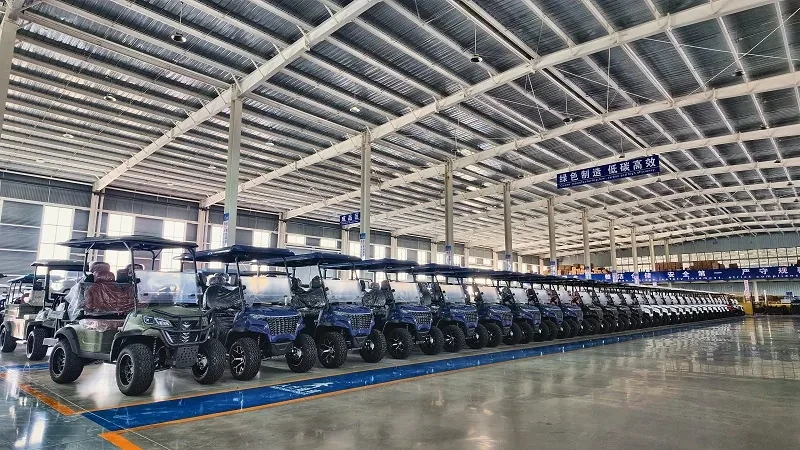
The useful range of a fleet vehicle is the work it can complete within an agreed operating plan. That plan includes passengers, working loads, slopes, waiting time, accessories and opportunities to recharge. A distance figure from a catalogue cannot describe all those conditions on its own.
For a golf club, resort or private property, the practical question is therefore specific: can the selected build perform its assigned duty, with an appropriate reserve and a charging routine the team can follow? This guide explains how to answer that question through observation, supplier confirmation and a representative trial. It does not prescribe electrical installation work or battery repair procedures.
Describe the day in trips and time blocks
Begin with a route log. List the normal journeys, their approximate distance, the load and the period of the day when they occur. Include return trips and repositioning; an empty vehicle returning to reception still consumes operating time and energy. Record any seasonal change that regularly alters demand.
Use several representative days rather than a single quiet shift. A golf fleet may have a different pattern during a competition. A resort may have concentrated arrival and departure periods followed by shorter evening movements. A facilities vehicle may travel little overall but spend repeated periods carrying its heaviest load.
Add the time spent boarding, unloading, waiting and cleaning. These intervals can create opportunities to charge, but only when the vehicle is physically close to the charging point and the supplier approves the proposed routine. Ten minutes between bookings is not automatically ten minutes connected to a charger.
Ask operators where the plan regularly breaks down. Unscheduled luggage runs, late guests and changes in work assignments can be as relevant as the formal schedule. A useful brief captures the duty the fleet actually performs, then identifies which exceptions it should reasonably be designed to absorb.
Identify the variables behind a range claim
Request the conditions behind any quoted range. The configuration, payload, speed, surface, temperature, route profile and test method are all relevant questions. A result without its test conditions is difficult to apply to a different property. Ask for those details before treating two distance claims as comparable.
Think about the complete vehicle. Larger or different tires, passenger equipment, a cargo body and added electrical accessories may change the operating requirement. A particular battery and motor combination should be reviewed with those choices together. Equipment from two catalogue pages should not be assumed compatible simply because both are offered somewhere in the range.
Temperature also belongs in the brief. Tell the supplier the expected operating conditions, where vehicles are parked, and when charging takes place. Request the battery and charger’s stated temperature limits and any operational restrictions for the proposed system. An appearance suited to outdoor use does not establish performance in every climate.
Keep battery condition in view over time. The route trial establishes a result for the tested vehicle under recorded conditions. It does not remove the need to monitor the fleet as usage accumulates, the season changes or service patterns grow. Review unusually rapid changes instead of assuming that the original result remains representative indefinitely.
Compare battery options as complete systems
Battery selection should include usable operating expectations, charger compatibility, installation, support and the maintenance routine. A purchasing discussion framed only around amp-hours misses those practical questions. Ask the vehicle supplier to identify the exact battery and the supporting components in the quotation.
Different chemistries and constructions have different requirements. Trojan Battery’s maintenance guidance distinguishes battery types and explains that charging technology, equipment loads and climate matter to care. Treat manufacturer guidance as system-specific information; do not transfer a charging setting or maintenance procedure from another battery to the one supplied.
For a proposed lithium system, request the battery documentation, protection-system information, compatible charger and a clear process for reporting faults. For a lead-acid proposal, establish the construction actually supplied and its care requirements. The term maintenance-free should be clarified in the product documentation rather than interpreted as permission to omit inspections.
Compare the support that your team can realistically deliver. A technically suitable system may still require a different service arrangement, replacement-part supply or operator instruction. Ask how the supplier identifies the installed version and handles later changes. The useful comparison is between supported vehicle systems in your operation, not isolated battery labels.

Distinguish stored energy from working availability
For a basic comparison, nominal voltage multiplied by rated amp-hours gives a nominal energy figure in watt-hours. It is only a starting calculation. It does not account for the permitted operating window, test-rating conditions, conversion losses or the complete vehicle’s energy use. It should never be presented as a guaranteed driving distance.
An operations plan needs a second view: when is the vehicle available? A larger battery may help with a long duty, while a better dispatch plan or an additional charging window may solve a different availability problem. The right response depends on which constraint the route log actually reveals.
In a hypothetical example, one vehicle spends most of the morning on continuous transfers, while another performs brief facilities rounds with long planned stops. Their daily distances might look similar. Their charging opportunities and consequences of interruption are different, so they should not automatically receive the same operating plan.
Make reserve an explicit discussion with the supplier. Define the additional work or uncertainty it should cover and validate the proposed approach during the trial. Avoid selecting an arbitrary percentage from an unrelated vehicle type. The final operating thresholds must fit the supplied system and the approved use.
Match charging windows to vehicle assignments
Create a simple timetable for each duty. Mark when the vehicle is required, when it can return to the charging area, and how long it can remain there. Include handover between shifts and the time needed for any required checks. Ask the supplier which charging routine suits the exact battery and charger.
The table below is an illustrative planning worksheet. It contains no charging-time promise; each row is a question to resolve with the equipment supplier and site team.
| Operating pattern | Planning question | Evidence to collect |
|---|---|---|
| Continuous guest transfers | When can a vehicle leave service without a queue? | Dispatch log, peak demand and alternative vehicle availability |
| Scheduled golf rounds | How are return times and the next assignment coordinated? | Round schedule, return condition and approved charging routine |
| Facilities rounds | Can planned stops coincide with an approved charging window? | Route schedule, charging location and supplier instructions |
| Seasonal operation | How will vehicles be stored and brought back into service? | Battery-specific storage and recommissioning information |
Confirm charging duration under the relevant starting conditions. A quick estimate that ignores the battery’s starting state, charging profile or temperature can leave the next shift short of available vehicles. Have the supplier explain what the charger’s indications mean and how staff should recognize an incomplete or abnormal cycle.
Avoid making charging the responsibility of whoever finishes last without a clear handover. Assign each vehicle a location and identify who checks connection, charging status and readiness according to the supplied instructions. A repeatable routine is easier to review when a vehicle unexpectedly misses its next duty.
Treat the charging area as a site project
Confirm the electrical input requirements for the supplied chargers, then have the site’s competent electrical team assess the installation. Connector fit alone is not evidence that an existing outlet arrangement is suitable. The site assessment should address simultaneous demand, protection, environmental conditions and the applicable local requirements.
The U.S. Department of Energy’s charging infrastructure development checklist covers coordination with utilities and electrical contractors, site conditions, future expansion and operating responsibilities. Although its equipment examples concern road EV infrastructure, the need to plan the site before installation is relevant here. Golf cart charger specifications must come from the actual supplier.
Think through the physical workflow as well as electrical capacity. Drivers need to park predictably without blocking circulation or creating a cable obstacle. The responsible site team should determine suitable charger placement, protection from the environment and access for inspection. Follow the equipment’s instructions for location and ventilation.
Give expansion a place in the conversation. An initial fleet and a later addition may create different simultaneous charging demands. Record which assumptions the installation assessment covers and review it before more chargers are added. An unused parking space does not necessarily mean the electrical arrangement has spare capacity.
Run a representative trial before scaling up
Agree a trial with the supplier using the intended vehicle configuration. Record the installed components, vehicle condition, starting charge indication, load and route. Note the weather and any important difference from the intended daily duty. A comparison becomes much easier when the conditions are written down.
Use a route and procedure appropriate for competent operators and the site’s rules. The purpose is to observe the agreed working pattern, not to discover absolute vehicle limits through improvised testing. Confirm how the supplier wants charging, state-of-charge indication and any protection behavior to be interpreted during evaluation.
Record more than distance. Note trip completion, driver feedback, loading time, charging availability and any fault indication. If the plan depends on a midday charging window, test the actual workflow, including travel to the charging point. An operational inconvenience may be important even when the vehicle finishes the route.
Discuss the result against the original requirement. If the trial is incomplete or unusually favorable, identify what remains unproven. A revised route, a different battery or a changed duty assignment may call for another evaluation. Keep the approved result connected to the configuration that produced it.

Give operators a clear handover routine
Keep the daily routine short enough to be used. Staff should know which vehicle is assigned to their duty, how to perform the prescribed pre-use checks, which charger belongs to the vehicle and how readiness is recorded. The exact inspection content should follow the vehicle and battery documentation.
Provide a clear response to faults or visible damage: stop using the affected equipment when required by the instructions, identify it and contact the responsible service person. Operators should not bypass protection functions, substitute an unapproved charger or attempt an improvised repair to keep the schedule moving.
Maintain an accessible record of model references and instructions. Trojan Battery’s official guides and manuals directory, for example, separates documentation for different battery products and includes charger-compatibility information. Obtain the equivalent current documents for the actual battery and charger supplied in your fleet.
Make shift handover visible. Record a vehicle that is unavailable, not fully ready or awaiting inspection instead of leaving the next operator to discover the issue. A simple dispatch board can distinguish vehicles in service, connected for charging and withheld for attention without requiring a complex software project.
Make the operating record useful to the service team
A useful log explains an interruption in context. Record the vehicle identifier, assigned route, approximate load, time and the indication observed by the operator. Add whether the vehicle had completed its normal charging routine and whether anything had changed since the previous shift. These details are more helpful than an isolated complaint that the battery did not last.
Keep observations separate from diagnosis. An operator can report a warning, an unexpected stop or a charging indication without deciding which component caused it. The service owner can then collect the information requested by the supplier and follow the approved diagnostic process. Replacing components based on guesswork can make the original cause harder to identify.
Track repeated patterns across the fleet. If several vehicles miss readiness on the same morning, review the shared charging or handover process as well as the vehicles. If one assignment repeatedly creates a problem, compare its load and timing with the duty used for acceptance. The pattern helps determine which question to investigate next.
Close the record with the action taken and the outcome in normal service. A vehicle returning from attention should be assigned according to the responsible service person’s instruction, with unresolved restrictions visible to dispatch. Over time, this creates a practical history that supports planning, supplier conversations and decisions about future fleet capacity.
Review the plan as the fleet accumulates experience
Collect a small set of consistent observations: completed duties, charging interruptions, unexpected unavailability and recurring faults. Compare like with like. A heavily loaded vehicle on a demanding route should not be judged against a lightly used unit without accounting for the assignment.
Investigate changes in context. A different tire specification, a new accessory, increased passenger demand or a relocated charging area may explain why a previously workable plan now struggles. Ask the supplier to review configuration changes before assuming that a battery replacement is the only answer.
Schedule a review before expansion or a major seasonal change. Confirm whether the original operating assumptions still hold, whether the charging installation covers the additional demand and whether the service arrangement can support more units. Keep a record of the decisions for the next purchasing cycle.
The most dependable planning outcome is a repeatable working day: vehicles assigned to suitable duties, a charging routine supported by their documentation, trained operators and a clear response when something changes. Distance remains part of the picture, but it becomes useful because the conditions around it are understood.